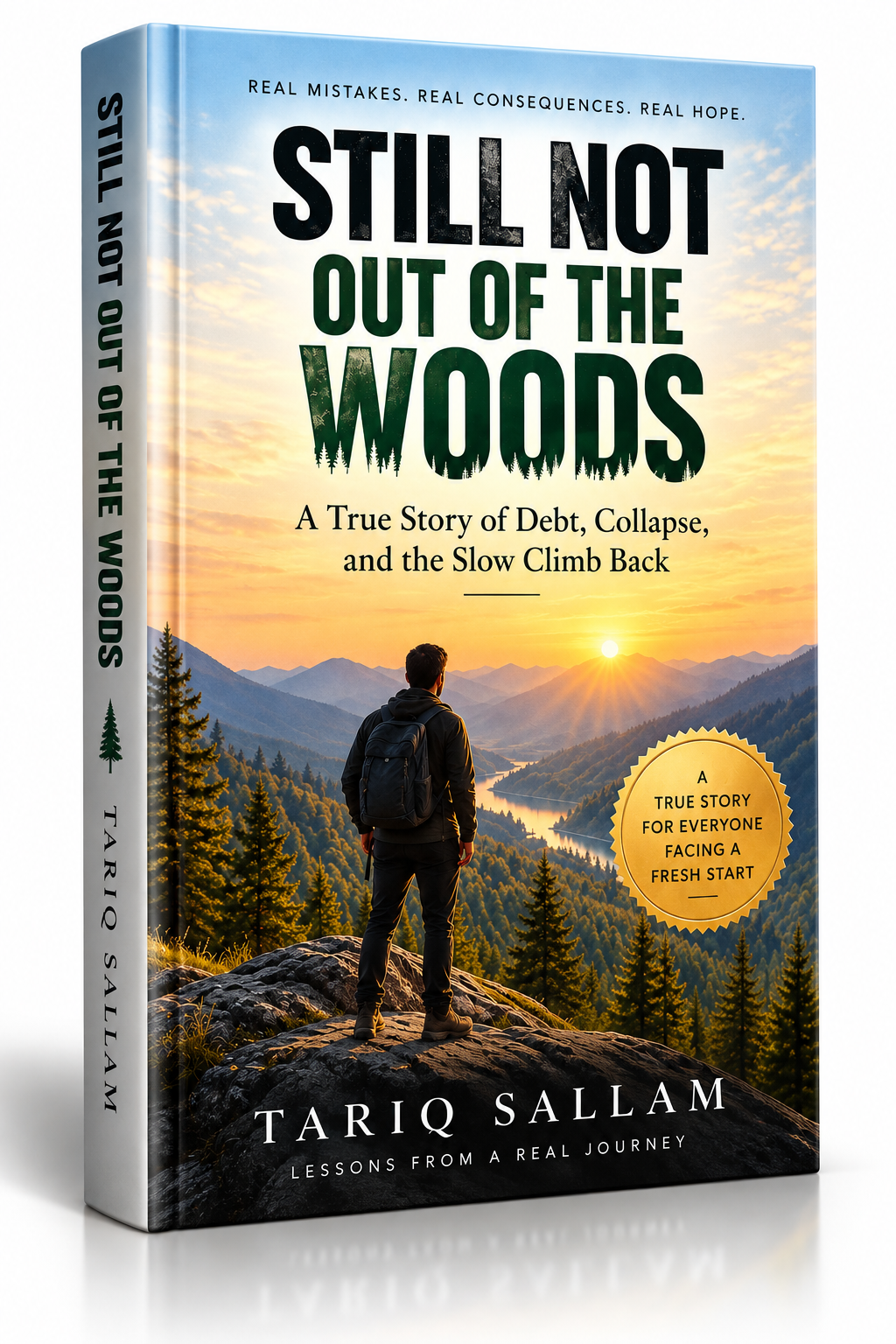
Still Not Out of the Woods
A True Story of Debt, Collapse, and the Slow Climb Back
I built a real business, lost almost all of it through one well-intentioned but reckless decision, and spent the years since rebuilding while carrying the debt the whole way. I am still paying it down. That is why I wrote this now rather than waiting for a tidy ending.
Almost every debt recovery story you'll find is written from the far side of the fire.
There is real value in those books. But they are told by survivors who already know how it ends, and that certainty quietly shapes everything they write. I don't have that certainty to offer you. What I have instead is an honest account from someone still inside it, still making the calls, still doing the monthly math, and still, somehow, further along than I was a few years ago.
If you're reading this because you, or someone you love, is in the middle of a debt crisis right now, I wrote the book for you specifically. Not for the version of you that will exist once it's over. For the version reading tonight, still in it.
It is also written for anyone supporting a family member through their own crisis. The story chapters explain what they are likely feeling and can't articulate. The framework chapters give you concrete ways to help.
This is not a finance manual. I am not a chartered accountant, a certified financial planner or a debt counsellor. Everything practical in it comes from what worked, and what failed, in my own life.
Chapters
Debt Triage, in five steps
Words for the call you're dreading
Five scripts you can read out loud as they are: asking an individual creditor for time, proposing a fixed monthly amount, calling a bank about an account in default, ending a call that has turned abusive, and turning down a relative offering to lend you money to clear another debt.
"I want to talk to you honestly about what I owe you. I haven't forgotten it, and I'm not avoiding you."
Sample pages
FAQs
Is the debt cleared by the end of the book?
No, and I say so plainly in the first pages. There is still a significant amount outstanding and I still get the occasional reminder. I believe, based on steady months of progress, that I can clear it within roughly a year. A belief is not a guarantee, and I have learnt not to promise timelines I can't be certain of.
Do I have to read it in order?
It was written to build in order, but if you're in an active crisis and need something to do tonight, skip to the back matter. The Debt Triage Worksheet and the Scripts section work independently of the rest of the book. Come back to the story chapters when you have the room for them.
Is this financial advice?
No. I am not a financial adviser, and nothing in the book replaces professional advice specific to your situation. The structural and financial information in the back matter reflects my understanding at the time of writing and should be verified against current official sources.
How honest is it about the personal side?
Honest enough that some chapters are hard reading: financial harassment, a collapsed marriage, three years I can barely reconstruct clearly. I have changed identifying details about some of the people in these pages out of respect for their privacy. The events, decisions and consequences are real and mine to tell.
Is it specific to India?
The story is set in Bangalore, and the resources section covers Indian avenues such as RBI-approved credit counselling centres and the Banking Ombudsman scheme. The frameworks themselves are not country-specific.
Further along is possible, even before finished is.