


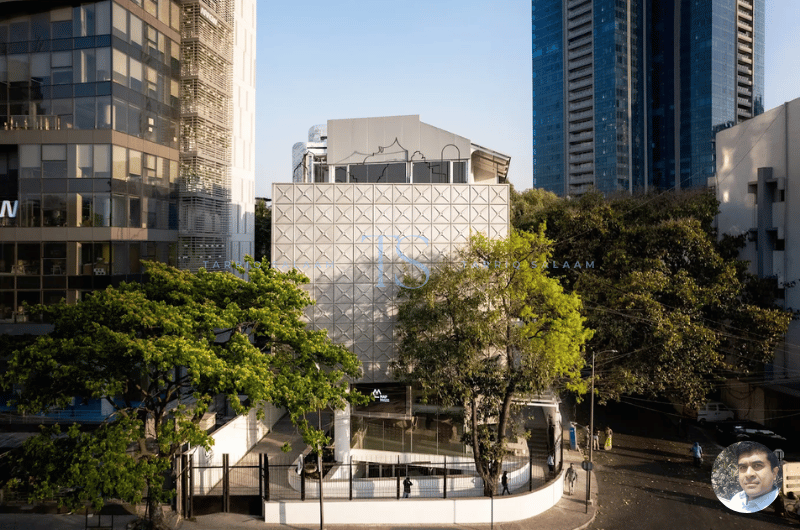
If you’ve ever driven down Kasturba Road and wondered, “Is that a futuristic water tank storing something top secret?”
Relax. It’s not a sci-fi bunker.
It’s the Museum of Art and Photography (MAP) in Bengaluru.
And trust me, this place doesn’t just store art.
It stores stories, rebellion, nostalgia, pop culture, heritage, and occasionally, your sense of time (because I genuinely lost track of it).
Museum of Art and Photography (MAP), Bengaluru isn’t just a museum — it’s where centuries of Indian art casually hang out under one seriously cool roof.
As a Bangalorean who loves exploring cultural spaces in the city, I walked into MAP thinking it would be a “quick museum visit.”
Instead, I walked out feeling like I had time-traveled from the 10th century to contemporary Instagram-era photography, all in one building.
Let me take you through my experience.
Quick Information: Museum of Art and Photography (MAP)
Running late but still want to sound culturally sophisticated? I’ve got you covered.
Here’s the cheat sheet version. But if you scroll down, you’ll get the full “I accidentally spent 3 hours in a museum” experience. 😄
| Detail | Information |
| Location | 22, Kasturba Rd, Shanthala Nagar, Bengaluru – 560001 |
| Nearby Landmarks | Cubbon Park, MG Road Metro, Vidhana Soudha Metro |
| Opening Days | Tuesday – Sunday |
| Timings | Tue–Fri: 10 AM – 6:30 PMSat–Sun: 10 AM – 7:30 PMMonday: Closed |
| Special Note | Tuesday – Free entry to exhibitions |
| Ticket Price | Starting at ₹100 (Discounts available) |
| Founded By | Abhishek Poddar |
| Established | 2016 |
| Collection Size | 60,000+ artworks |
| Official Website | https://map-india.org |
First Impressions: That Building Though!

(Source: Google)
Before I even stepped inside the Museum of Art and Photography (MAP), I had a full architectural moment.
From a distance, the building looks like this bold, industrial, slightly mysterious structure with embossed steel panels.
The façade has this cross-pattern texture that makes it look like it’s hiding something extremely important inside.
Which, technically, it is. 60,000+ artworks.
It’s designed by Mathew & Ghosh under the guidance of Rahul Mehrotra and the MAP Architectural Committee, and the concept is honestly brilliant.
The building is inspired by the idea of a water tank, a place where something precious is stored.
Except here, instead of water, it’s art. And instead of pipes, you’ve got galleries.
There’s this beautiful play of transparency and opacity in the design.
Some parts feel open and inviting, others feel intimate and focused.
Almost like the building itself understands that art needs breathing space.
And let me tell you, it stands out on Kasturba Road.
With Cubbon Park nearby and heritage institutions across the road, MAP somehow feels both modern and completely at home in the area.
Also, yes. It is ridiculously Instagrammable.
I tried to be “serious art critic guy,” but within five minutes, I was angling my phone like a lifestyle influencer. 😀
What is the Museum of Art and Photography (MAP) Exactly?
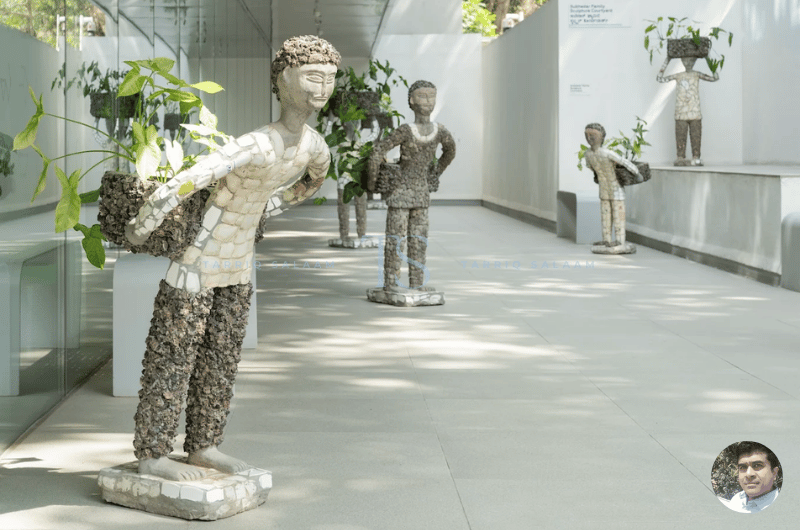
(Source: Google)
Okay, so what is the Museum of Art and Photography (MAP), really?
In simple terms: it’s South India’s first major private art museum.
In slightly dramatic terms: it’s a cultural powerhouse hiding in plain sight.
Founded in 2016 by prominent art collector Abhishek Poddar, MAP was born out of one man’s three-decade-long passion for collecting Indian art, textiles, photography, and cultural objects.
What started as a private collection eventually evolved into a full-scale public institution.
And here’s something that impressed me: MAP receives no government funding.
It’s a not-for-profit institution and a project of the Art & Photography Foundation, supported by philanthropists, patrons, and corporate sponsors.
That independence shows. The programming feels fresh, bold, and experimental.
The museum spans six floors and includes:
- Art galleries
- Digital experience centres
- A research and conservation lab
- A shop
- A café
- A member’s lounge
- A rooftop restaurant
Basically, it’s not just a museum. It’s a full ecosystem.
But what I really love about MAP is its mission. It’s not trying to be intimidating or elitist.
It wants art to be accessible, engaging, and relevant.
Whether you’re a hardcore art historian or someone who just came because your friend dragged you along (we all know that friend), MAP makes sure you leave with something meaningful.
The Galleries: Where I Lost Track of Time
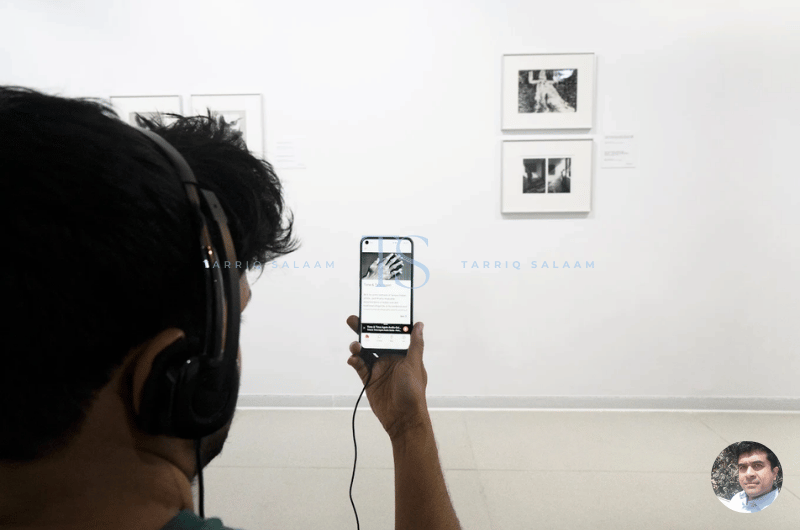
(Source: Google)
Let’s talk about the real star of the show: the galleries.
I walked in telling myself, “Okay, I’ll do a quick two-hour visit.”
That was adorable. Because once I started moving through the floors, time stopped existing.
The collection at MAP spans from the 10th century to the present day.
That’s not a small timeline. That’s a full-blown historical marathon.
You move from:
- Pre-modern devotional art
- To modern Indian masters
- To contemporary works that make you tilt your head and say, “Wait… what does this mean?”
- To photography that captures raw, unfiltered moments of Indian life
- To textiles and craft that quietly remind you how insanely skilled our artisans have always been
And then there’s popular culture.
Film posters, ephemera, objects that make you go, “Oh my God, my grandparents had something like this!”
The curation is smart.
It doesn’t overwhelm you with too much information. It nudges you.
It invites you to observe, question, and reflect.
One moment, I was staring at a traditional miniature painting.
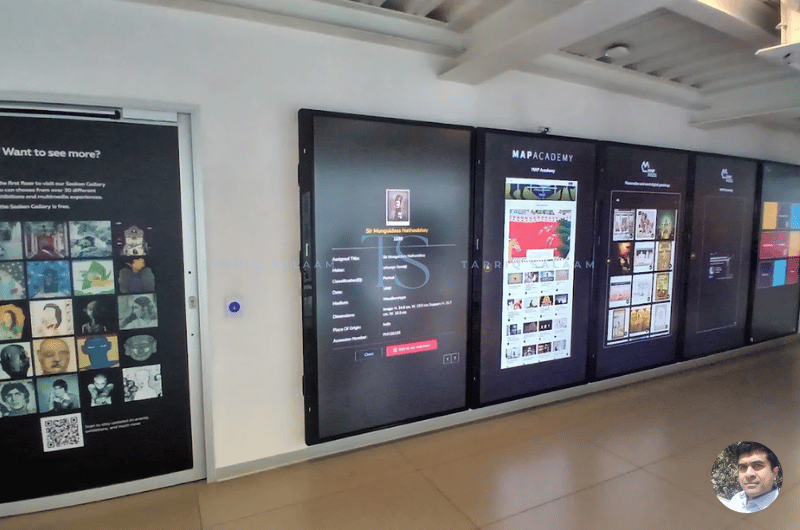
The next moment, I was in a digital experience zone engaging with art through screens and interactive displays.
It’s this seamless blend of old and new.
Like MAP is constantly saying, “Tradition and technology can absolutely hang out together.”
And what I appreciated most?
You don’t need to “understand” everything. You just need to feel something.
There were pieces that made me smile. Some that made me uncomfortable.
A few that made me pause longer than expected.
And honestly, that’s when you know a museum is doing its job.
By the time I reached the final floor, I realised I had spent way more time than planned.
My legs were mildly protesting. My brain was buzzing.
And my respect for Indian art had levelled up significantly.
Not bad for a “quick visit,” right? 😄
Accessibility: Art For Literally Everyone
(Source: Google)
One thing I genuinely respect about the Museum of Art and Photography (MAP) is that when they say “art for all,” they actually mean it.
This isn’t one of those places where accessibility is a small paragraph hidden in the footer of the website.
It’s built into the DNA of the museum.
The building itself is designed with mobility in mind.
Accessible parking, ramps, thoughtfully designed pathways, elevators that don’t make you feel like you’re on a treasure hunt, and accessible restrooms.
You don’t have to “figure it out.” It’s intuitive.
But it doesn’t stop there.
MAP has:
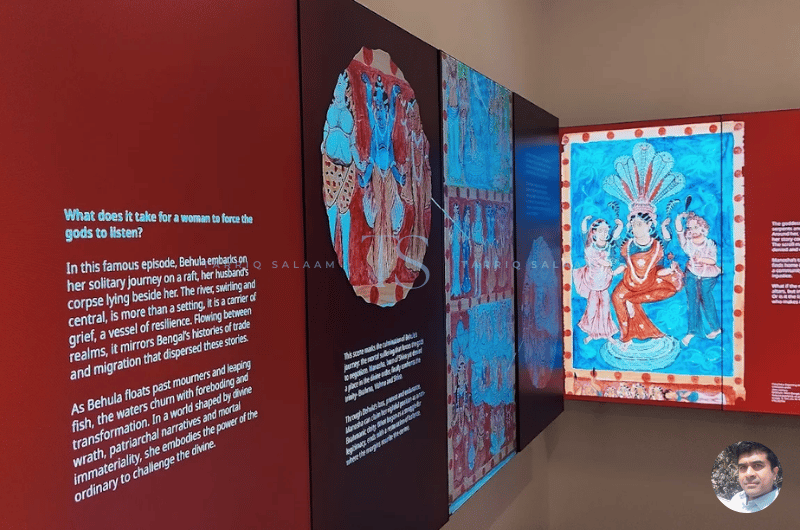
- Audio guides
- Tactile artworks
- Inclusive digital guides via the Bloomberg Connects app
- Indian Sign Language interpretation videos
- Screen-reader-friendly resources
And honestly? That’s huge.
Art spaces can often feel intimidating or exclusive.
But here, whether you’re a child, a senior citizen, a student, or someone with a disability, MAP has consciously created an environment where you don’t feel like an afterthought.
They even won the 15th NCPEDP-Mphasis Universal Design Award (2024) under the Role Model Companies & Organizations category.
That’s not a small achievement. That’s recognition for setting standards.
I walked through the galleries thinking, “This is what modern museums in India should look like.”
Inclusive. Thoughtful. Human.
Because what’s the point of preserving culture if not everyone can experience it?
The Conservation Lab: Quietly Saving India’s Heritage
(Source: Google)
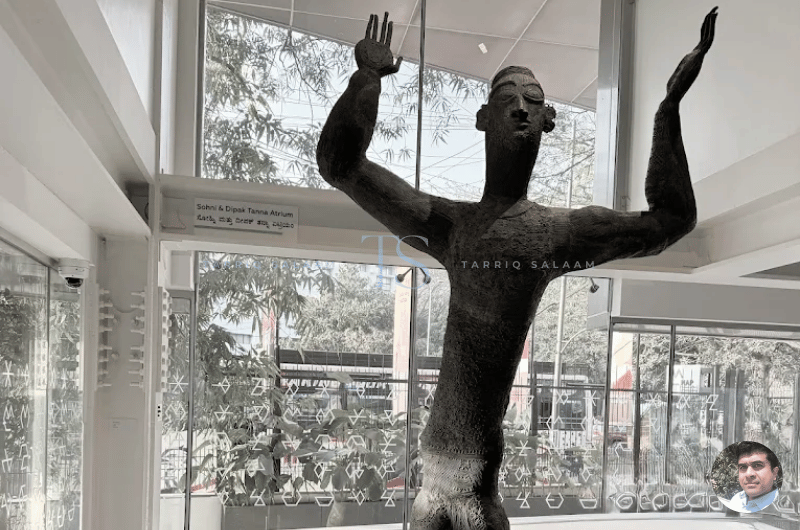
Okay, this part may not be flashy or Instagrammable, but it might be the most important room in the building.
Hidden within MAP is a state-of-the-art conservation lab, set up with the support of Tata Trusts in 2019.
And this is where the real magic happens. The kind that doesn’t trend on social media.
India’s climate, especially in the South, isn’t exactly gentle on art.
Humidity, heat, time… they all take their toll.
And when you’re custodian to over 60,000 artworks, that’s a serious responsibility.
MAP’s conservation team works quietly behind the scenes to:
- Restore fragile works
- Prevent long-term deterioration
- Develop preservation strategies
- Stay updated with global conservation techniques
While I was exploring the museum, it hit me. We’re not just looking at beautiful objects.
We’re looking at history that has survived because someone cared enough to protect it.
And MAP isn’t just preserving its own collection.
The long-term vision is to create one of India’s largest conservation labs that can collaborate with institutions across the country.
That’s powerful.
Because preserving art isn’t just about nostalgia.
It’s about safeguarding identity, memory, and collective heritage.
And yes, I may have gotten slightly emotional thinking about that.
Museum of Art and Photography (MAP) Membership: Is It Worth It?
(Source: Google)
Now let’s talk practical.
Is a MAP membership worth it? Short answer: If you love art even a little bit, yes!
Long answer? Let’s break it down.
A MAP membership gives you:
- Priority access to events (both free and paid)
- Full access to online exhibitions
- Access to their video library (artist talks, webinars, film premieres)
- Educational resources and curated essays
- Kids’ activity packs
- Preferred access at the museum
- Discounts at the store and café
If you’re someone who:
- Attends cultural events
- Enjoys learning beyond surface-level Instagram captions
- Has kids who need something more enriching than endless screen time
- Or just wants to feel slightly sophisticated on weekends
Then membership actually makes sense.
And here’s the part I appreciate.
It’s not just about “exclusive access.” It’s about building a community around art.
MAP is trying to create a museum-going culture in Bengaluru.
Not just one-time visitors, but regulars.
People who show up for talks. Who debate art over coffee. Who bring their kids to workshops.
It feels less like a transaction and more like joining a movement.
Would I personally consider it?
If I find myself going there more than a couple of times a year, absolutely.
Plus, let’s be honest.
Any excuse to revisit the gift shop is a valid excuse. 😄
The MAP Store & Café: Because Art Makes You Hungry
(Source: Google)
Let’s address the obvious truth.
Art appreciation burns calories. (Okay, maybe not scientifically, but emotionally? Definitely.)
After walking through six floors of paintings, textiles, photography, and existential reflection, I found myself gravitating toward the MAP Store and café like it was destiny.
The MAP Gift Shop – Danger Zone
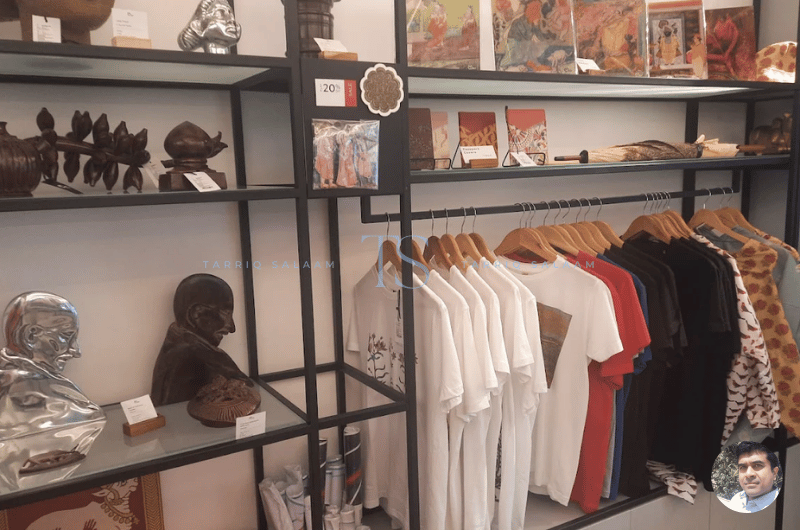
The MAP Gift Shop is not your typical “buy a boring fridge magnet and leave” situation.
This place turns art into everyday experiences.
Think:
- Thoughtfully designed stationery
- Art-inspired collectibles
- Home décor pieces
- Books you didn’t know you needed
- Gifts that make you look cultured and well-prepared
Everything feels curated. Not mass-produced souvenir energy.
You can tell there’s a design sensibility behind it.
I walked in saying, “I’m just browsing.”
Five minutes later, I was mentally justifying purchases with lines like:
“This is not spending. This is supporting culture.”
Be careful in there. 😀
The Café & Rooftop Vibes
There’s a café on the lower ground floor that’s perfect for decompressing after your gallery marathon.
Coffee, desserts, light bites, the usual heroes.
And then there’s the rooftop restaurant, Cumulus by SMOOR.
Now imagine this.
You’ve just explored centuries of Indian art. You’re slightly overwhelmed (in a good way).
You step onto the rooftop, Bengaluru breeze in your face, dessert in hand.
Elite.
It’s the kind of place where conversations automatically become 30% more intellectual.
“I found the interplay between tradition and modernity fascinating.”
(Translation: That painting was cool. 😉)
How to Reach the Museum of Art and Photography (MAP)
(Source: MAP)
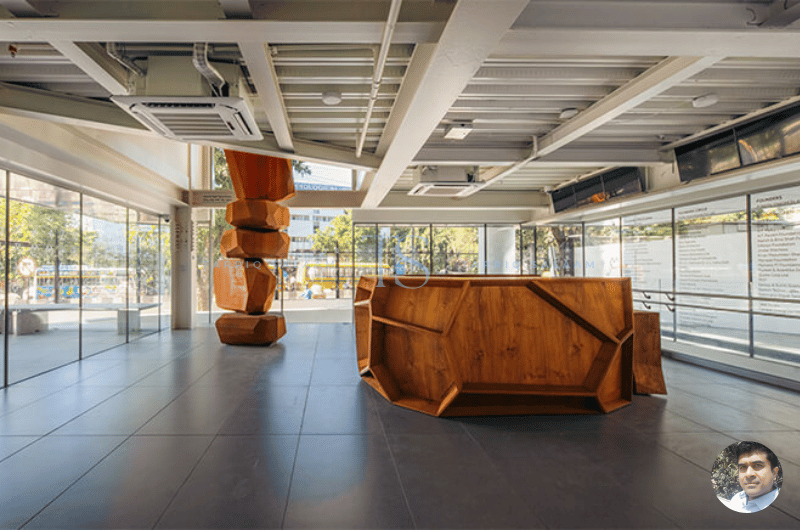
One thing I genuinely appreciate about the Museum of Art and Photography (MAP) is its location.
It’s right in the cultural heart of Bengaluru.
Address:
Museum of Art and Photography (MAP)
22, Kasturba Road, Shanthala Nagar, Bengaluru – 560001
And the best part? It’s ridiculously accessible.
By Metro (Highly Recommended)
MAP is within walking distance of:
- Cubbon Park Metro Station
- MG Road Metro Station
- Vidhana Soudha Metro Station
If you live in Bengaluru, you already know this:
Taking the metro = arriving calm and cultured.
Driving in peak traffic = arriving mildly dramatic.
By Car
If you’re driving, parking is available on Kasturba Cross Road and around UB City.
But honestly?
I’d suggest the metro whenever possible.
Nothing ruins a peaceful art experience like hunting for parking while questioning your life choices.
Timings (So You Don’t Show Up on Monday Like I Almost Did)
- Tuesday to Friday: 10:00 AM – 6:30 PM
- Saturday & Sunday: 10:00 AM – 7:30 PM
- Monday: Closed
Pro tip:
Tuesday is free entry to exhibitions. Yes, free. Your wallet approves.
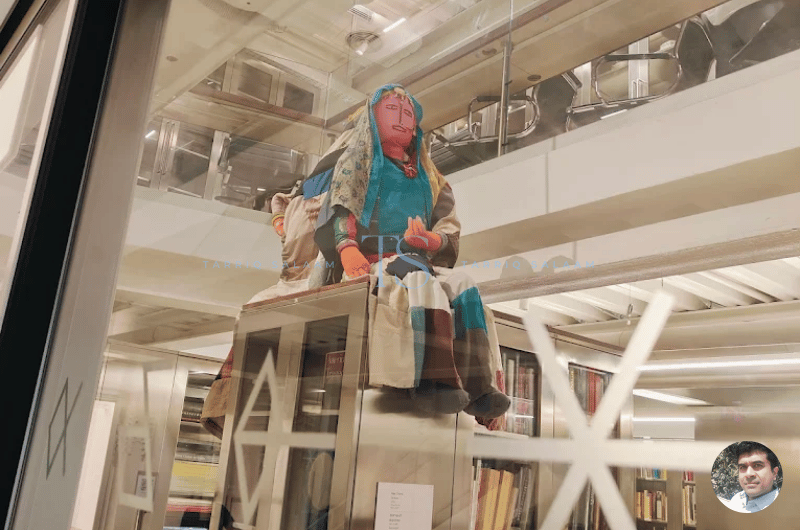
Why Museum of Art and Photography (MAP) Matters to Bengaluru
(Source: Google)
Now let’s zoom out for a second.
Bengaluru is known for startups, tech parks, funding rounds, and people casually using words like “scalable” in coffee shops.
But MAP adds something different to the city’s identity.
It adds depth.
As South India’s first major private art museum, MAP signals that Bengaluru isn’t just building apps. It’s building a cultural legacy.
It creates:
- A space for dialogue
- A hub for artists and thinkers
- A platform for preserving Indian heritage
- A reason for families to spend weekends doing something meaningful
And here’s what I personally love. It helps build a museum-going culture.
Growing up, many of us didn’t casually say, “Let’s go to a museum this Sunday.”
Now, in Bengaluru, you actually can. And it feels natural.
MAP also bridges worlds:
- Classical and contemporary
- Traditional and digital
- Local and global
When artworks from its collection are exhibited at institutions like The Met or Tate Modern, it reinforces something powerful.
Indian art belongs on the global stage.
But more importantly, it belongs right here in our city, too.
As someone who writes about Bengaluru and genuinely cares about its cultural landscape, I can confidently say this:
MAP isn’t just another place to visit.
It’s one of the city’s most important cultural landmarks.
And if we want Bengaluru to be known not just as India’s Silicon Valley but also as a serious cultural capital, places like MAP are leading that movement.
Contact & Visitor Information: So You Actually Go
(Source: Google)
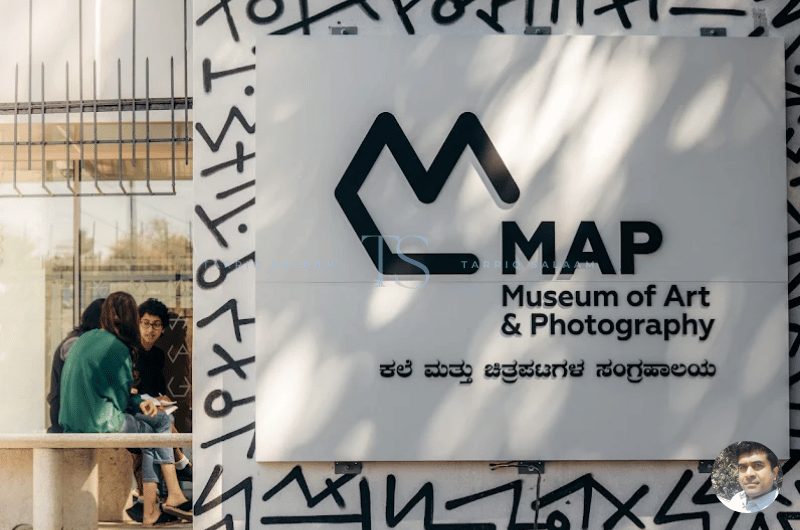
If reading this has convinced you (even slightly) to visit the Museum of Art and Photography (MAP), here’s everything you need to plan your trip properly, without last-minute confusion.
📍 Address
22, Kasturba Road, Shanthala Nagar,
Bengaluru, Karnataka 560001
📞 Phone
+91 80 6933 4100
🌐 Official Website: https://map-india.org
Check Out Current Exhibitions at MAP
MAP constantly curates physical and online exhibitions that explore Indian art, photography, textiles, popular culture, and contemporary themes in new ways.
Before you visit, I highly recommend checking what’s currently on display:
👉 Exhibitions: https://map-india.org/exhibitions/
Trust me, knowing what’s on will make you sound 47% more informed while walking through the galleries.
Upcoming Events at MAP
From artist talks and workshops to webinars and panel discussions, MAP has a very active events calendar.
You’ll find:
- Art talks
- Film screenings
- Learning workshops
- School & educator programs
- Cultural conversations
Check the full calendar here:
👉 Events: https://map-india.org/events/
Some events are free, some are paid, and if you’re a member, you often get priority access.
Buy Tickets
You can book your tickets online here:
Pro tip: Tuesday is free entry for exhibitions. Your wallet says thank you.
FAQs About Museum of Art and Photography (MAP)
Let’s answer the common questions, including the ones you might pretend you already knew. 😄
What is the Museum of Art and Photography (MAP)?
The Museum of Art and Photography (MAP) is South India’s first major private art museum, located in Bengaluru. It houses over 60,000 artworks spanning from the 10th century to the present day, covering modern art, photography, textiles, popular culture, and more.
Where is MAP located?
MAP is located on Kasturba Road in Bengaluru, within walking distance of Cubbon Park, MG Road Metro, and Vidhana Soudha Metro stations.
What are the opening hours of MAP?
Tuesday–Friday: 10:00 AM – 6:30 PM
Saturday–Sunday: 10:00 AM – 7:30 PM
Monday: Closed
Tuesday offers free entry to exhibitions.
How much are the ticket prices?
Ticket prices start at ₹100 per exhibition.
Discounted rates are available for:
Students (19–25 with ID)
Senior citizens
Defence personnel
People with disabilities
Children (6–18 years)
Children below 6 enter free.
Who founded MAP?
MAP was founded in 2016 by prominent Indian art collector Abhishek Poddar.
Is MAP accessible for visitors with disabilities?
Yes. MAP is designed with accessibility in mind, offering ramps, accessible restrooms, audio guides, tactile artworks, and inclusive digital resources. It has also received national recognition for universal design.
Does MAP offer educational programs?
Yes. MAP offers workshops, school programs, educator development sessions, kids’ activities, and public lectures. They also plan hybrid art history courses.
Can I host events at MAP?
Yes! MAP offers venue spaces, including:
Auditorium (Capacity: 130)
Research Centre
Courtyard & Reception
Learning Centre
It’s honestly one of the coolest event venues in Bengaluru — art + ambience = instant upgrade.
For bookings: bookings@map-india.org
Is MAP membership worth it?
If you love art, events, workshops, or cultural experiences — yes. Membership gives you priority event access, full online exhibition access, video archives, and more.
Can I use images from MAP’s collection?
Yes, but you’ll need to contact the communications team at: hello@map-india.org. There are licensing terms you must follow.
Does MAP have a café and gift shop?
Yes, and both are dangerously good. The gift shop has curated art-inspired products, and there’s a café plus rooftop restaurant for post-gallery recovery sessions.
My Final Thoughts: Should You Visit MAP?
If you:
- Love art
- Love photography
- Love history
- Love culture
- Or just love exploring Bengaluru
Then yes. Absolutely yes.
Even if you think you “don’t understand art,” MAP has a way of pulling you in.
It’s immersive without being overwhelming. Thoughtful without being preachy.
I went in curious.
I walked out inspired.
And slightly poorer thanks to the gift shop.
If you haven’t visited the Museum of Art and Photography (MAP) in Bengaluru, add it to your weekend list right now.
Go on a Tuesday if you want free entry.
Go on a Saturday if you want the full vibe.
Just go.
And when you do, tell me which exhibit blew your mind.
Until the next Bengaluru exploration,
Found the article informative? Was it helpful?
Let me know in the comments below. I’d love to hear from you. 🙂
Follow me for more insider guides, lesser-known facts, and unforgettable experiences across Bangalore and beyond.
Until next time,
Exploring Bangalore, one story at a time — right here on tariqsp.com.

Need Help in Bangalore?
Whether you’re looking to buy, sell, or rent property in Bangalore, need assistance with property documentation or liaison work, or just need help getting something, rather, ANYTHING done in the city, I’m here to help.
And if you’d like to get featured or want an article written about you, your business, or your brand, feel free to reach out.
Just drop me a line at hello@tariqsp.com or ping me on WhatsApp (bottom right of the screen).
I’m always happy to connect! 🙂
Tarriq Salaam


